Wednesday, 18 April 2012

ABC Wednesday - N is for Nature

N is for Nature.

What a wonderful word Nature is since it covers so many things in the world that interest me. I could post a butterfly or a moth, an oak tree or a red squirrel. All of those are part of the Natural World. But I decided not to cheat and specifically went for creatures and plants that began with N.


So here is a Rufous-bellied Nitava. It is found in Bangladesh, Bhutan, China, India, Laos, Myanmar, Nepal, Pakistan, and Thailand. Its natural habitats are subtropical or tropical moist lowland forests and subtropical or tropical moist montane forests. But this one was in my town – Chester in England – at the zoo.

A Nomada species of bee. The genus Nomada is one of cuckoo bees and they are parasites on ordinary bees so they lack a pollen-carrying sac and are often extraordinarily wasp-like in appearance with red, black and yellow colours prevailing, and with smoky wings or wing tips.


This plant is called Navelwort because of the leaves resemblance to a navel.


This is Nipplewort – named for less obvious reasons. The name Nipplewort was coined by John Parkinson who wrote in his Theatrum Botanicum; or an Herball of Large Extent, 1640, "Camerarius (a physician and botanist of Nuremburg) saith that in Prussia they call it Papillaris, because it is good to heale the ulcers of the nipples of womens breasts, and thereupon I have intituled it Nipplewort in English."


Newts from my garden pond.


A Northern Marsh Orchid on the Isle of Anglesey, North Wales.


The leaf of a Norway Maple.


A North American River Otter – once more from a zoo (or Otter sanctuary, I can’t recall which).

Thank you Mother Nature for all your wonders.

If you would like to see what other Wednesday folk have chosen for this letter please visit...


Sunday, 15 April 2012

Perhaps Henry Ford was inspired by this?

From the diary of fifteen year old orphan Laura Troubridge in Norfolk, England, in 1873


Monday, October 26th 1873

I was thinking the other day how I should spend my day if I was allowed to do as I liked and if it was possible. First I should get up whenever I felt inclined, then I would do no lessons all day (except perhaps sometimes read a little history), but I would not be idle - on the contrary, very industrious, for I should draw all day long and when I was sick of it, I should get a comfortable armchair by the fire and read a novel.

For exercise I should have a sort of double velocipede, consisting of two armchairs, worked either by hand or foot, which would go about a hundred or fifty miles an hour*. But I should always have the second armchair filled by somebody who I really wanted to drive with me and I should like to have the power of wishing any person to be in it I wanted. (I know who would be there very often), and we would go long drives about, spinning along, almost like flying. In the evening we would either take a long moonlight drive or else go to a dance or the play, whichever we felt inclined for. I should always have loads of money and loads of new novels. I should always be exquisitely dressed and never wear old slonche fouffes҂, and should also have hair over my forehead! I forgot to put I should be awfully kind and should always be giving everybody heaps of splendid presents.

Would not that be a delightful life?

I forgot to put I should very often travel, always with my velocipede and my companion and I should also sometimes go to London, the two last of course with the others too, who I should be awfully jolly to and who would adore me.

Scriptor's Notes:-

An extract from the book 'Life among the Troubridges' edited by Jaqueline Hope-Nicholson, 1966. I shall tell you what was really Laura's 'The Day of My Life' on another occasion.


*Sixty years later a 1937 Bentley 4¼ litre could reach 50 mph in just over 10 seconds and top out at 95 mph. How Laura would have loved it.

҂ In the book 'slonche fouffes' is simply described as ‘a family word for clothes’ but I suspect its origin was in the French word fouffes meaning old clothes that have seen better days or cleaning rags and slonche was a way of saying for slouching around in.


Thursday, 12 April 2012

Friday My-Town Shoot-out - Historic

I live in the suburban ‘township’ of Pensby on the Wirral peninsula in the UK. It is one of the most photographically boring places in the world. I spend a few weeks of my year on the Isle of Lewis in the Outer Hebrides and usually manage a visit to Exeter at least once a year. Since Pensby is near the historic towns of Liverpool and Chester I have a tremendous choice for my Friday Shoot-outs. But today I am showing a couple of buildings that are nearly in Pensby. They are in the adjacent area of Irby. They are two cottages, one of which was formerly Benty Heath Farm (I think).


This cottage was built in 1732  (apologies that this initially said 1832 because of a typing error).


Some of the things that occurred in 1732, the year this cottage was built:-


Feb 22nd – George Washington, first President of the United States, was born (d. 1799)

Feb 26th - 1st mass celebrated at St Joseph's Church (the first American Catholic church), Philadelphia

March 31st – Joseph Haydn, Austrian composer, was born (d. 1809)

April 5th – Jean-Honoré Fragonard, French painter, was born (d. 1806)

April 8th – David Rittenhouse, American astronomer, inventor, mathematician, surveyor, scientific instrument craftsman, and public official, was born . (d. 1796)

April 13tg – Frederick North, Lord North, Prime Minister of the United Kingdom (d. 1792)

Jun 9th - America's Georgia colony had its beginnings in a charter granted by George II to English philanthropists who included James E. Oglethorpe for lands between the Altamah and Savannah Rivers. Oglethorpe's parliamentary investigations into penal conditions had led him to advance the idea of establishng an American colony for newly freed and unemployed debtors.

Aug 1st - Foundation laid for Bank of England.

Sept 16 – A magnitude 5.8 earthquake occurred in Montreal, Quebec, Canada.

Dec 4th - Playwright-poet-librettist John Gay died in London aged 47.

Dec 7th - The Royal Opera House opens at Covent Garden, London.

Dec 19th - Benjamin Franklin under the name Richard Saunders began publication of "Poor Rich-ard's Almanack". Primarily an agricultural handbook, it gave sunset and sunrise times, high and low tides, weather predictions, and optimum dates for planting and harvesting. It also offers practical suggestions, recipes, advice on personal hygiene, and folksy urgings to be frugal, industrious, and orderly ("God helps those who help themselves," "Never leave till tomorrow that which you can do to-day," "You cannot pluck roses without fear of thorns, nor enjoy a fair wife without danger of horns.")

Dec 23rd – Richard Arkwright, English inventor, was born (d. 1792).

Famine struck Western Japan as crops were ruined by an excess of rain and a plague of grasshoppers: 2.6 million went hungry and 12,400 died.


This one was built in 1786


During 1786 the following happened -

May 1 – Mozart's opera The Marriage of Figaro premieres in Vienna.

May 21 – France's diamond necklace affair ends in the acquittal of Cardinal de Rohan. The comte de La Motte is believed to have escaped to London with the necklace and is condemned in his ab-sence to serve in the galleys for life. The comtesse de La Motte is condemned to be whipped, branded, and locked up in the Salpetrière. Cardinal de Rohan is exiled in disgrace to the abbey of la Chaise-Dieu; Marie Antoinette is disappointed by his acquittal.

Jun 8th - Commercially made ice cream 1st advertised (Mr Hall, NYC)

June 10 – An earthquake-caused landslide dam on the Dadu River gives way, killing 100,000 in the Sichuan province of China.

August 1 – Caroline Herschel discovers a comet (the first discovered by a woman).

August 8 – Mont Blanc is climbed for the first time by Dr. Michael-Gabriel Paccard and Jacques Balmat.

August 17- David "Davy" Crockett, American frontiersman, was born (d. 1836)

August 17- Princess Victoria of Saxe-Coburg-Saalfeld, Mother of Queen Victoria, was born (d. 1861)

August 17- Prussia's Friedrich II (the Great) dies at his Sans-Souci Palace in Potsdam at age 72 af-ter a 46-year reign.

September 2 – A hurricane strikes Barbados.

Dec 29th - French Revolution: The Assembly of Notables is convoked

Goethe undertakes his Italian Journey (published in 1817).

Native Americans hold a council at which the Seneca chief Sagoyewatha (né Otetiani), now 28, ar-gues the inevitability of making peace with the new United States

Russia's Catherine the Great begins a second war with the Ottoman Empire

The first ship leaves Britain for Botany Bay, Australia: 820 out of 1,138 aboard are convicts.

Millwright Andrew Meikle develops the first successful threshing machine

If you would like to see what historic features other members of the gang have found please click on this FMTSO link.


Thoughts on a Thursday


Meet Maya the latest member of my family. Well, I’m assuming she must be because she’s joined the family photos on the study wall. Actually she’s a member of Silke’s family of artwork from Savannah in Georgia. If you like this innocent young girl you might want to look at Silke’s artwork for sale on her Etsy site.

It appears I am now officially a spammer! After all the trouble I’ve had with people spamming me and nothing being done to stop them I’m now getting comments rejected because, to quote the sites concerned, ‘Your comment appears to us to be spam’. So what the hell does one do about that? I now can’t leave any comment on the sites concerned – I appear to have been barred! So I’ll have to resort to one of my other identities (the ones I use to really spam with – just kidding) to leave a comment saying I can’t leave comments any more. Are there times when you wonder why you take part in this blogging game at all????

(See my comments below for even more reasons to wonder why one bothers!)

One of the reasons may be that I’m a sucker for memes – the sort where people are asked a set of questions, answer them and then other bloggers do the same on their blogs. But I like to pick and choose the ones I adopt and even then I like to pick out the questions that most interest me. One I came across recently asked, inter alia, 'What is your most favorite sound and what is your least favorite sound?' Apart from the fact that, being pedantic, I don’t think you can have a ‘most favourite’ of anything it set me thinking.

I’m not sure I can pick out one sound that tops them all. Among my favourites from days-gone-by would certainly have been the sound of a zip being unzipped on a pair of girl’s long boots or the silky sound of a slip falling to the floor. Nowadays my mind goes more to the sound of the electric kettle being put on, the Blackbird singing its dawn song, the back door opening to signal the arrival home of Partner-who-loves-tea, the thump of mail or an Amazon parcel landing on the mat, or the ‘bing’ sound as an e-mail lands in my in-box.

My least liked sound, before they died last year, had to be that created when one accidentally stepped on Meek or Samantha’s tail! A screeched Meeooww! Nowadays it is the perpetual noise of one sort or another created by the adjacent nursing home in the middle of the night. The only consolation when they drop a load of dishes in their kitchen is that it stops the hysterical shouting and laughter which seems to be an otherwise necessary part of the staff making breakfast for the residents at five in the morning.

What sounds do you like /abhor? By all means share them as a comment or point us to a blog posting where you pursue the subject!

Wednesday, 11 April 2012

ABC Wednesday – M is for ...

My M is for Mill.


A mill may be a factory for certain kinds of manufacture, as paper, steel, or textiles. This mill in Chorley was part of the cotton manufacturing industry that made South Lancashire and the port of Liverpool so rich in days gone by.

A mill is also a building equipped with machinery for grinding grain into flour and other cereal products. These sort of mills may be water mills or windmills.


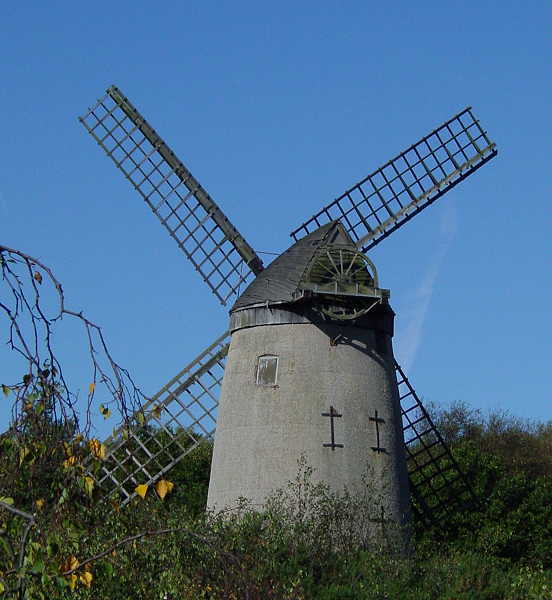
This disused windmill is at Bidston on The Wirral, quite near where I live.


The rest of my photos are all watermills like the Norse Iron Age Mill and Kiln - Shawbost - Isle of Lewis - Western Isles


This mill at Dedham in Essex was made famous in Constable's paintings.


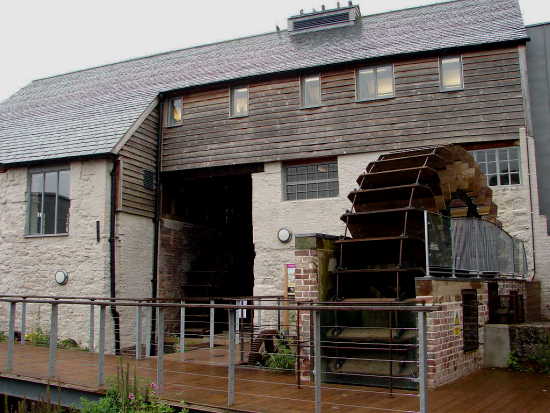
Cricklepit Mill, Exeter, Devon.


Rosset Mill, Cheshire.


Mills have machinery and millstones and millwheels... This mill at Otterton in Devon was made famous by Daughter-who-takes-photos marrying Son-in-law-and-friend-who-loves-otters last year!


Going around dusty mills can make you thirsty so near to us we have the Irby Mill inn.


And I shouldn't forget Miss Millicent Brookes, a distant cousin of mine, though I have to admit it's not one of my photos!!

If you would like to see what other Wednesday folk have chosen for the letter M please visit...


Blog Archive