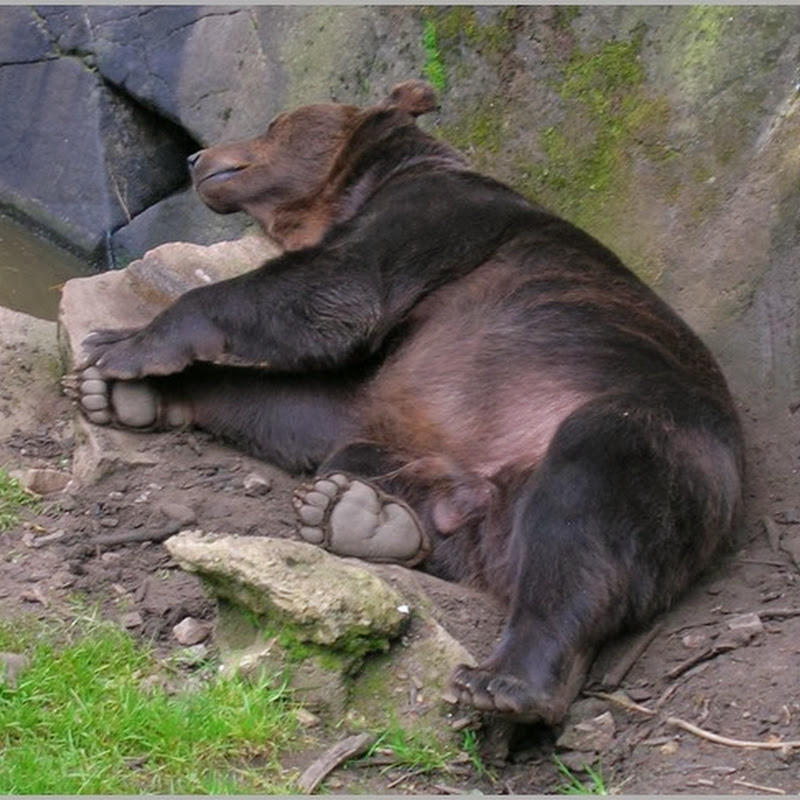
I’m still around – just. I have had a migraine alternating with a
background headache since Christmas Eve and I’m getting a bit fed up of
it. The best I can do, thanks to large
doses of tablets, is a couple of hours free at a time. Then it’s back to bed with the occasional touch
of hitting my head on the wall. I’m annoyed
because after a bad winter last year I though I’d found (or rather my
neurologist had found) a tablet combination that worked. So it’s back to the drawing board to see if
she can come up with something else.

As a temporary relief the best thing I
have found is cold compresses at regular intervals. This is much easier during the winter than in
summertime because I can just use one then lay it on the bedroom window ledge
and it will get cold again while I use another one. I have half a dozen of these things on the window
ledge at any one time.
I’m not looking for sympathy so much as
explaining why there hasn’t been much going on blogwise apart from scheduled postings
on my Word and Postcard blogs.

And talking of my Word Blog - The term 'Back
to the drawing board' that I just used has been around since World War II as a
jocular acceptance that a design has failed and that a new one is needed. A drawing board is an architect's or
draughtsman's table, used for the preparation of designs or blueprints. In
America the phrase gained common usage quite quickly and began appearing in US newspapers
by 1947, as shown here in the Walla Walla Union-Bulletin, Washington, December
1947: "Grid injuries for the season now closing suggest anew that nature get
back to the drawing board, as the human knee is not only nothing to look at but
also a piece of bum engineering."
And one has to agree with that - pretty knees
are a rare find…

For more fascinating words and expressions you
can either visit my word blog or that excellent site The Phrase Finder.

Picture fromnZoo Borns blog
A rare baby Giant Anteater was born at our local
zoo, Chrster Zoo, on the day before Christmas Eve. The tiny baby, whose gender
is not yet known, is only the second of the species to ever be born at the zoo.
The baby will cling to its mother’s back for approximately six months until it
is ready to walk, explore and find food on its own. Its parents Pedro and
Bliss, both aged three, arrived at Chester Zoo in 2010 as part of an international
breeding program.

Picture - source unknown
Giant Anteaters are classed as ‘Vulnerable to
extinction’ by conservationists, so the birth is good news for the unusual
looking species. Native to Central and South America, the animals do not have
teeth but have tongues which can measure up to almost 24 inches (over half a metre)
long!
Blue for a boy (or should it be pink?)

Uncle Eric and Mum - 1913
For centuries children in the upper and middle
classes wore dainty white dresses up to the age of six - irrewpective of their sex. White - strange as it
may sound - was a most practical colour - white cotton could be bleached. But the dresses worn by children in the nineteenth
century weren’t necessarily gender neutral. While white remained popular for
infants, toddler boys wore dresses with darker, masculine colours and bolder
decorations while girl’s dresses were lighter and frillier. (Mum's - just to be awkward - has plenty of frills but is obviously of a dark velvet.)
A couple of
years earlier - around 1909 - this picture of Dad (standing on the chair )
shows him in a skirt or dress while his older brother, Frank, has gravitated to
shorts.

The idea of showing a baby’s gender in the specific
colour of their clothing has been around for at least a hundred years but not
much longer and it wasn’t quite the same in 1913 as it is in 2013. According to the Ladies Home Journal (quoting
a June 1918 article from the trade publication Earnshaw's Infants' Department):
“The
generally accepted rule is pink for the boys, and blue for the girls. The
reason is that pink, being a more decided and stronger colour, is more suitable
for the boy, while blue, which is more delicate and dainty, is prettier for the
girl.”
According to Jo B Paoletti – author of ‘Pink
and Blue: Telling the Boys from the Girls in America ‘(2012) - in 1927,
Time magazine printed a chart showing sex-appropriate colours for girls and
boys according to leading U.S. stores. In Boston, Filene’s told parents to
dress boys in pink. So did Best & Co. in New York City, Halle’s in Cleveland
and Marshall Field in Chicago.
It was in the 1940s that the changeover occurred
– the manufacturers and retailers who plumped for blue for a boy won and the trend
was set. I wonder when it will next change?


.jpg)