Friday, 6 April 2012

Friday My Town Shoot-out - Hidden niches

This week's FMTSO is hiden niches.  I decided to tackle it from two approaches.

My first is a hidden niche within our house.  This is the right hand base of a desk in the conservatory and the leg of a piano stool that lives by it.  I suspect most people who come wouldn't notice this little corner.


And for the suspicious amongst you - Yes, I admit I did have to dust it before I took the photo!

My other hidden niche is a craft centre and  retail outlet that is hidden away in the tiny village of Brimstage in the middle of The Wirral, Cheshire, on a little side road.  


Brimstage Hall and craft centre is based around a medieval pele or fortified tower.  Almost certainly the original house was a compact, fortified, building of the pele tower type, standing at the centre of a fortified area of some sixty acres, the whole being enclosed within a moat and high embankment.  Expert opinion concerning the date of the original building range from 1175 to 1350.


The retail outlets are in buildings in the form of a square courtyard surrounding a wonderful willow tree.

This is Saqqara, one of the retail outlets.  It has a huge range of beautiful ethnic fashions and irresistible gifts from faraway places.  We always manage to spend money we haven't got when we visit Saqqara.

If you would like to see what hidden niches other members of the gang have found please click on this FMTSO link.


Thursday, 5 April 2012

Have a good Weekend


Tuesday, 3 April 2012

ABC Wednesday – L is for Lichen

Lichens are composite organisms consisting of a symbiotic organism composed of a fungus with a  green alga or cyanobacterium.  So now you know!  Lichens occur in some of the most extreme environments on Earth.  Some lichens have the aspect of leaves (foliose lichens); others cover the surface like a crust (crustose lichens); others adopt shrubby forms (fruticose lichens), and there are also gelatinous lichens.  There are 1873 species listed in 'The Lichens of Great Britain and Ireland' - that's more lichens than there are native plants. Some are extinct but more are still being discovered each year, either new to the region or new to science.  The world lichen list probably stands at around 17,000 although it is difficult to be precise since many regions have not been thoroughly searched.

Herere some of the British lichens I have photographed.  Most species do not have a common name but a few do and I have included a few of those. 


 There are at least seven species of lichen in this photo.


 Woodlands and sea shores are the best places to spot lichens.


 Sometimes you can see the fruiting bodies in them.


  Cap Lichen (Caloplaca heppiana)


 Reindeer Moss (Cladonia species) N.B. not a moss but a lichen but the green stuff below it is a moss.

 Trumpet Lichen (Cladonia species)

 Matchstick Lichen  (Cladonia floerkeana)

 Pixie Cups (Cladonia pyxidata)

Oakmoss  (Evernia prunastri)

Elegant Script Lichen  (Graphis elegans)

 Disc Lichen (Tremolecia atrata syn. Lecidea dicksonii)

 Dog Lichen (Peltigera species)

 Antler Lichen (Pseudoevernia furfuracea)

Old Man's Beard (Usnea species)

Over 600 substances have been extracted from lichens which help them to survive in marginal environments and ward off attacks by bacteria, other fungi and grazing herbivores. These substances include pigments used in dyeing, toxins, air pollution monitors, perfumes, food and antibiotics used in medicines.

 (I am not a lichenologist so please do not rely on my identifications - there are dozens of similar species and many are very hard to identify.)
  
If you would like to see more examples of how the letter L has been handled by the Alphabet Wednesday crew please visit the ABC link site.


Scheduled to come on at midnight NZST. We shall see if Blogger obliges! It's been changing my scheduled posts back to drafts a lot of the time.

Monday, 2 April 2012

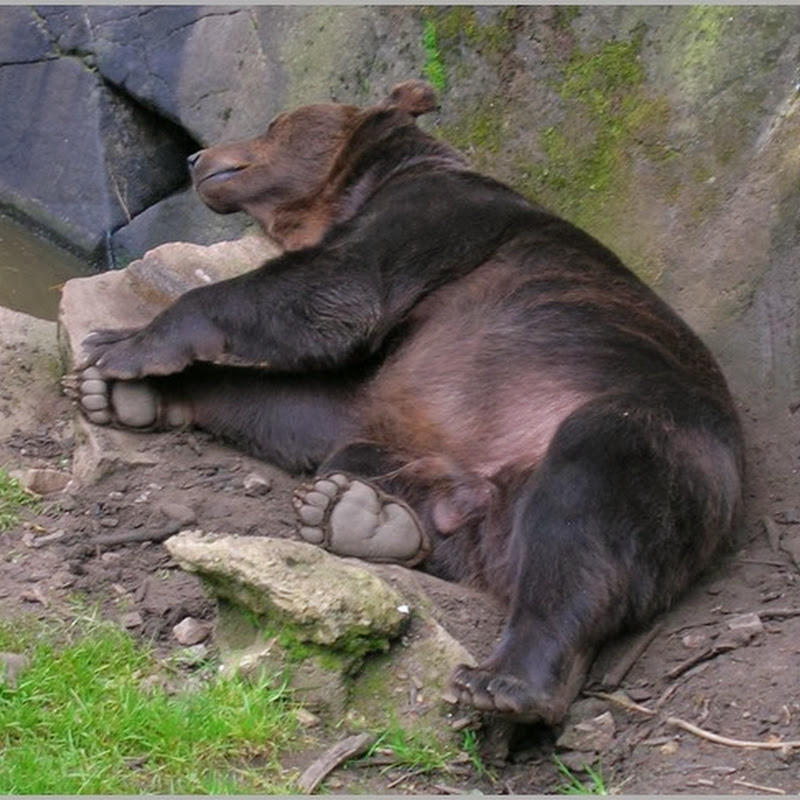
More 'How to Sleep like a Cat'

This was scheduled to come on at midnight.  When I got up at 6 a.m. it had been turned back into a 'Draft' by Blogger.  So I had to go into my list of posts and publish it.  Does any one else have that trouble?  I'd love to know how to solve it.

A week or so ago I gave you eleven examples of how to sleep like a cat. Here are some more. (Please note I didn't take the photos - they were in one of those round robin e-mails that occasionally turn up in one's in-box from a friend.  Source therefore unknown.)

12. The Sleeping Dog - Find a dog. Imitate the dog.


13. The Librarian - Bury your furry little head in your paws and try to look as contemplative and bookish as possible before drifting off.


14. The Married Couple - Don't be afraid to snore.


15. The Windowsill - The whole world is your hammock.


16. The Clothes Dryer - Imagine that you are a wet T-shirt, fresh from the washing machine. Drape yourself accordingly.


17. The Pot Luck - Think of yourself as a last-minute fruit salad that everyone will be very polite about but probably not enjoy all that much.


18. The Head-Rush - Head to the ground, paws in the air - let gravity do the rest.


19. The Odd One Out
- For this one you will need first to find two willing conformists.


20. The Mid-Sentence - Only recommended for individuals with extreme forms of narcolepsy.


21. The Bag Of Limbs (Box Edition)- Have a friend or loved one take you apart and put you back together haphazardly inside a box.


22. The Bag Of Limbs (Couch Edition) - Same as above, except (obviously) without the box.


23. The Dog Bed - Not a bed for dogs, but a bed that is made of dogs. i.e., the most comfortable bed you will ever sleep on that also smells kind of funky.


24. The Office Worker - Fall asleep on the job. LOL.


25. The Ruler - Measure the floor with every inch of your tiny body.


Sunday, 1 April 2012

April Fool's Day

"Man is the only animals that laughs and weeps, for he is the only animal that is struck with the difference of what things are, and what they ought to be." ~ William Hazlitt


Blogger is changing yet again on 1st April - I hope it doesn't turn out to be an April Fool that we have to live with for months to come.


Happy April 1st. A day traditionally known as April Fool's Day or All Fools’ Day. [Please note the difference in where the apostrophe lies with those two titles.] No one seems to know who or why this day was called April Fool's Day, but evidence of this day goes back at least as far as Geoffrey Chaucer's 'Canterbury Tales' published in 1392.

This therefore gives the lie to the idea that it stems from when New Year's Day was changed from March 25th to January 1st. In the Middle Ages March 25th was celebrated as New Year's Day and a week long celebration would ensue ending on April 1st. It has been alleged that when New Year's Day was changed to January 1st, that those who still celebrated the 'old ways' because they were traditionalists – or simply hadn’t yet heard about the change - were considered fools.  I suppose the folk at Blogger would consider me a fool because I am used to doing things the old way and see no reason to switch.

Pass me my cane and hat will you, I'm off out...


In Annunciation Style dating the new year started on 25 March, the feast of the Annunciation. This was used in many parts of Europe in the Middle Ages. Annunciation Style continued to be used officially in Great Britain until 1 January 1752 except in Scotland which [being cut off from the rest of the country] changed to Circumcision Style dating on 1 January 1600. The rest of Great Britain changed to the Feast of Circumcision Style on 1 January preceding the conversion in Great Britain from the Julian calendar to the Gregorian calendar on 3/14 September 1752.

The Julian Calendar that had been in use until that time had been developed 1700 years earlier, at the order of Julius Caesar, and had worked very well in the beginning but by the 16th century the seasons had grown out of alignment with the date. A new calendar was developed under the auspices of Pope Gregory XIII in 1582/3 and the Catholic countries of Europe were quick to adopt it. It took much longer for the Protestant countries to make the switch which meant that, for several centuries, two different calendars were in use in Europe. [One remarkable side effect of this was that getting on board an Alitalia flight to Italy involved not only putting your watch on but playing with your calendar and trying to see if you could have a fortnight’s holiday in the sun without being away from home at all].

The UK tax year still starts on 6 April which is 25 March + 12 days, eleven for the conversion from the Julian to the Gregorian calendar plus a dropped leap day in 1900. [But then the Inland Revenue has always been full of fools and even more unpleasant creatures who, this year, are demanding £2,500 over and above my normal 'donation' to the revenue - B******s.]

It’s traditional in many countries in the West to play tricks on people on April 1st. Sadly, neither Blogger nor the Inland Revenue are joking.


The earliest evidence of trick-playing came from France. There, the tradition is called Poisson d’Avril or April Fish, since, on that day, the French would often tape a cardboard fish onto someone’s backside or send them on a fool’s errand.

All of the above calendar information is, of course, totally irrelevant since, as we have already established, Chaucer mentioned April Fools. So you’ve just wasted five minutes but I hope you enjoyed it.

Have a nice day...

Blog Archive